Projects
Memory and Attention Control Lab - Arizona State University
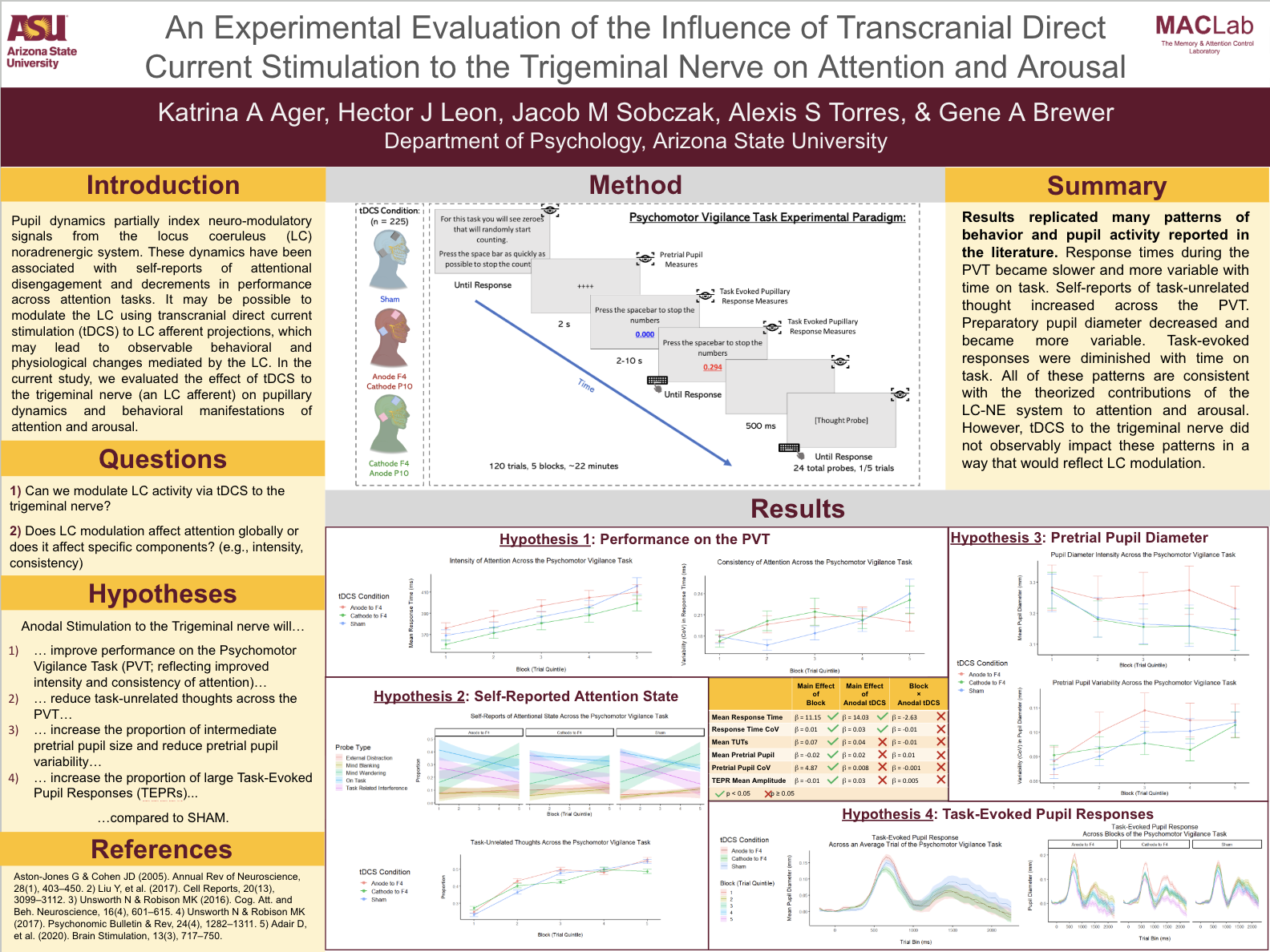
The Influence of Transcranial Direct Current Stimulation on Attention and Arousal
My Role: Lead Research Assistant
collected biometric data (eye tracking and pupillometry data), administer transcranial direct current stimulation to participants, train other RAs on procedure, presented findings at conferences
Conferences: Arizona Psychology Research Conference (2022), School of Life Sciences Research Symposium (2022)
Other Credits: Alexis Torres (Master’s Thesis), Gene Brewer (Principal Investigator)
Project Motivation and Explanation:
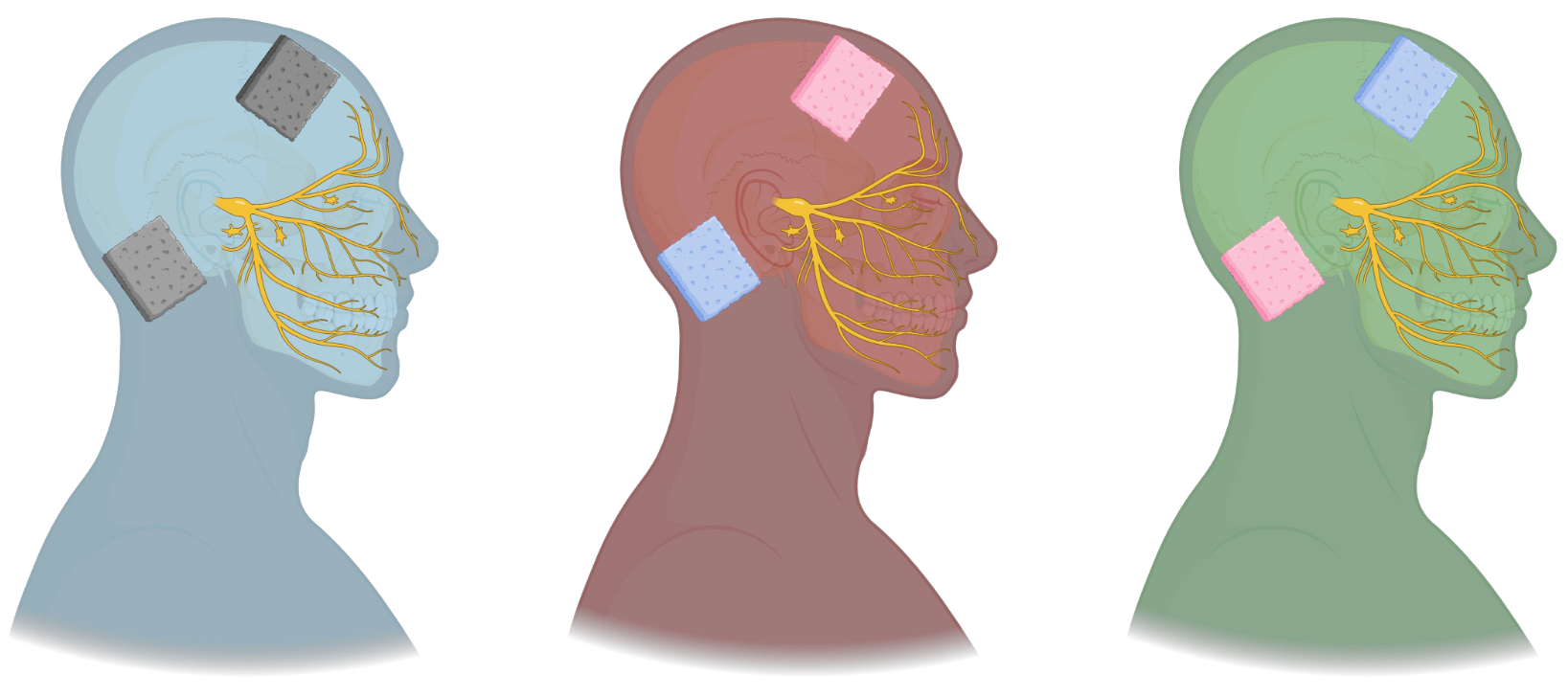
This project investigated whether or not humans can modulate attention and arousal by stimulating an input pathway to the locus coeruleus (LC), a brainstem system tightly linked to pupil size and vigilance. We used transcranial direct current stimulation (tDCS) over the trigeminal nerve, an afferent to the LC, while participants performed a sustained attention task (the Psychomotor Vigilance Task). Throughout the task, we recorded reaction times, self-reports of task-unrelated thoughts, and high-resolution pupillometry to track both baseline (pretrial) pupil diameter and task-evoked pupil responses as biological readouts of LC-Norepinephrine activity. The underlying motivation of this study was to investigate methods to treat patients with attention deficits using methods other than medication, and to understand how direct current stimulation can influence the way humans interact with their environment. While results showed there was no concrete evidence to support a positive correlation between LC stimulation and attention, this research helped to further the development of brain stimulation techniques and practices to help treat patients.
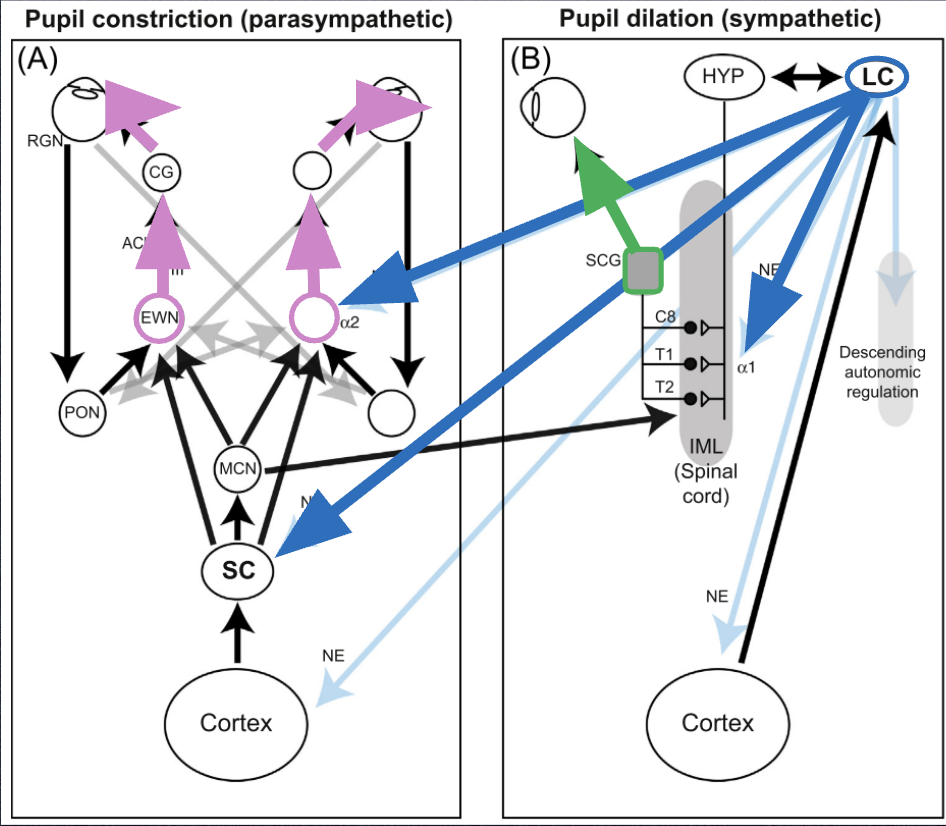
Schematic of the parasympathetic and sympathetic pupil control pathways. Highlights how (LC)–noradrenergic signaling integrates cortical and subcortical inputs to drive pupil dilation, with parasympathetic circuits mediating pupil constriction.
Technical Explanation of my contributions:
Biometric Sensing & Data Collection
Administered multi-modal biometric recordings: collected and synchronized pupillometry data, reaction-time measures, and self-reports of mind wandering as participants completed a sustained attention task
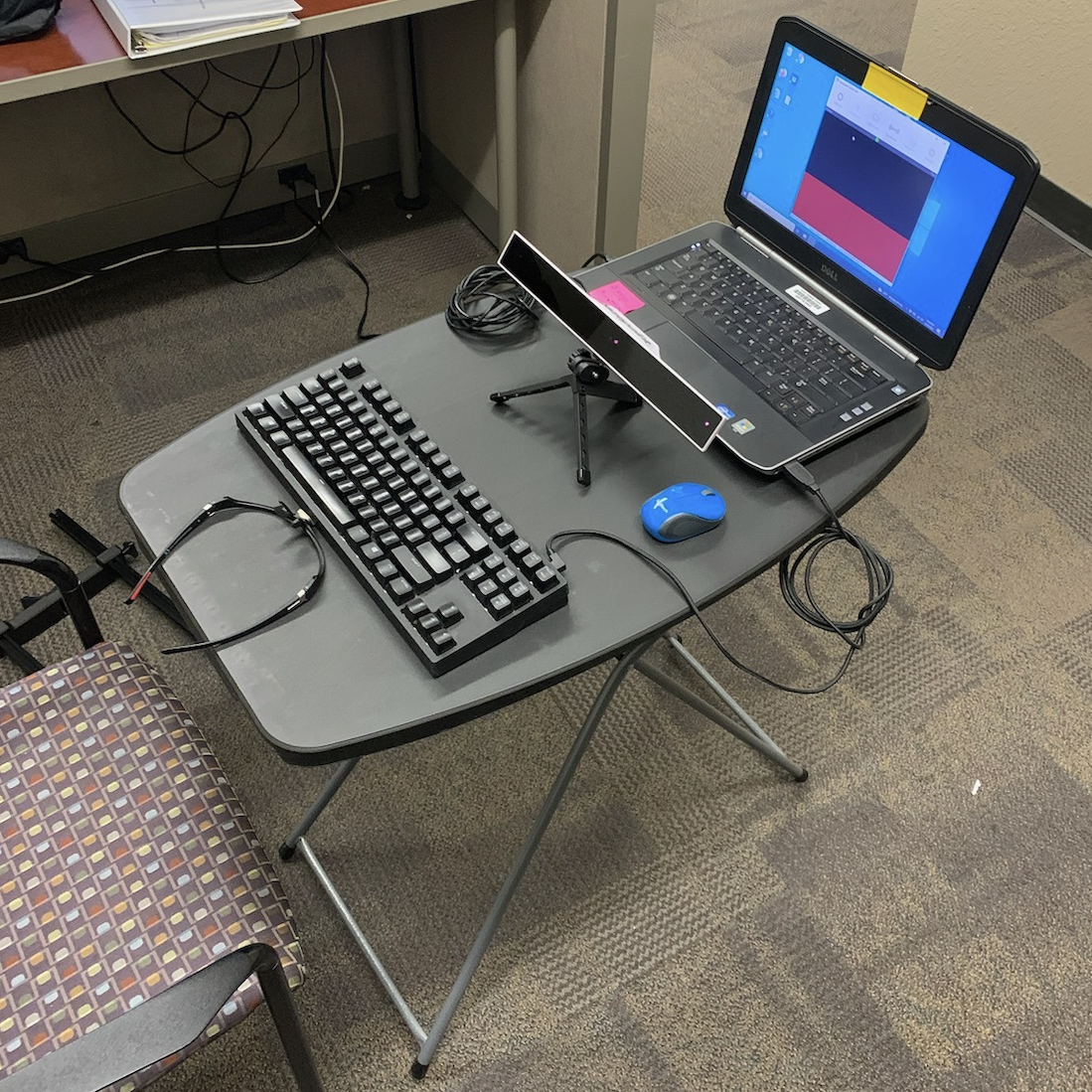
Set up and calibrated eye-tracking / pupillometry hardware, ensuring stable tracking, correct lighting, and robust signal quality across blocks and participants.
Handled tDCS setup and monitoring, placing electrodes over the trigeminal nerve target, checking impedance, and monitoring comfort and safety throughout stimulation and sham sessions.
Experimental Operations & Participant Management
Recruited, screened, and ran human participants from consent through debriefing, following ethical and safety procedures for neurostimulation studies.
Developed research assistant training procedures and monitored training to minimize artifacts in behavioral and physiological data due to researcher error.
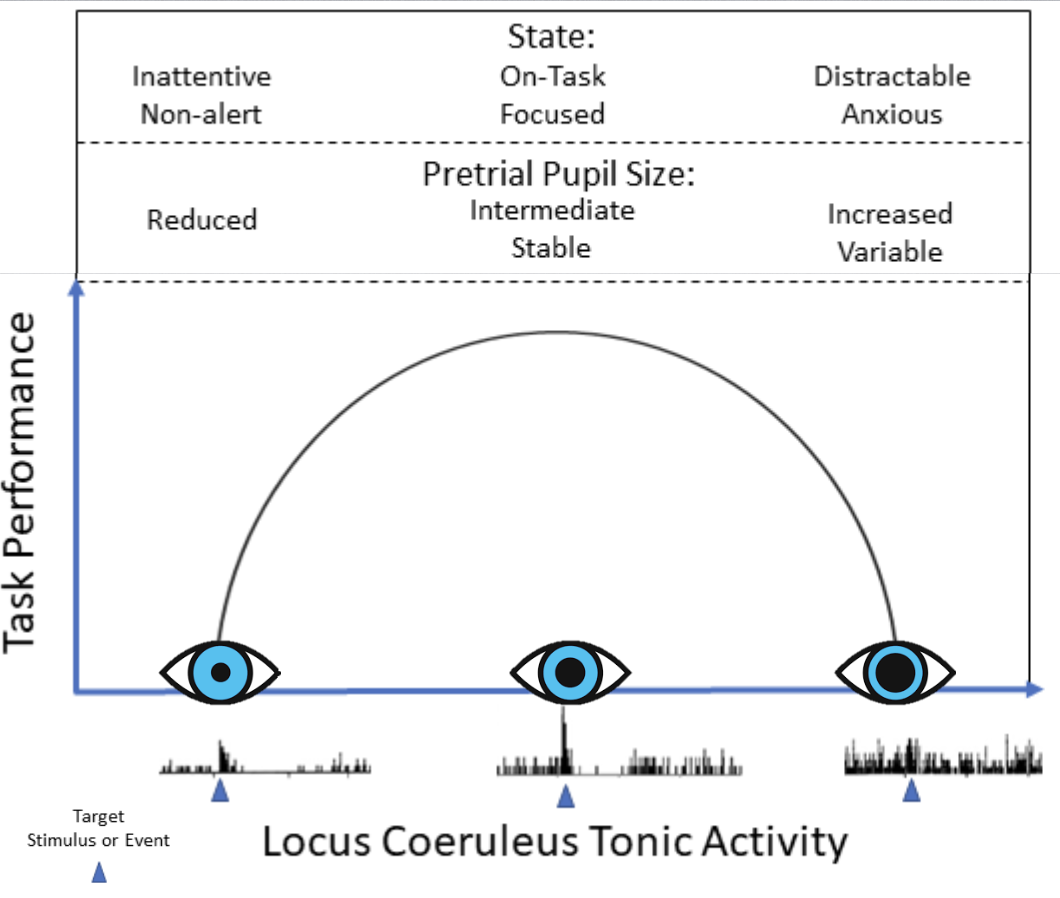
Conceptual model showing an inverted-U relationship between locus coeruleus tonic activity, pupil size, and task performance, where intermediate LC activity and stable pupil size correspond to optimal focus, while low or high activity relate to inattentive or anxious states.
Investigating Prospective Memory in Cannabis Users
My Role: Lead Research Assistant (MAC Lab)
travel to participant homes to assemble data collection set up, calibrate eye tracking equipment, and collect behavioral and biometric data
Other Credits: Xavier Celaya (Master’s Thesis), Gene Brewer (Principal Investigator), Madeline Meier (Principal Investigator - Collaborating Lab)
Project Motivation and Explanation:
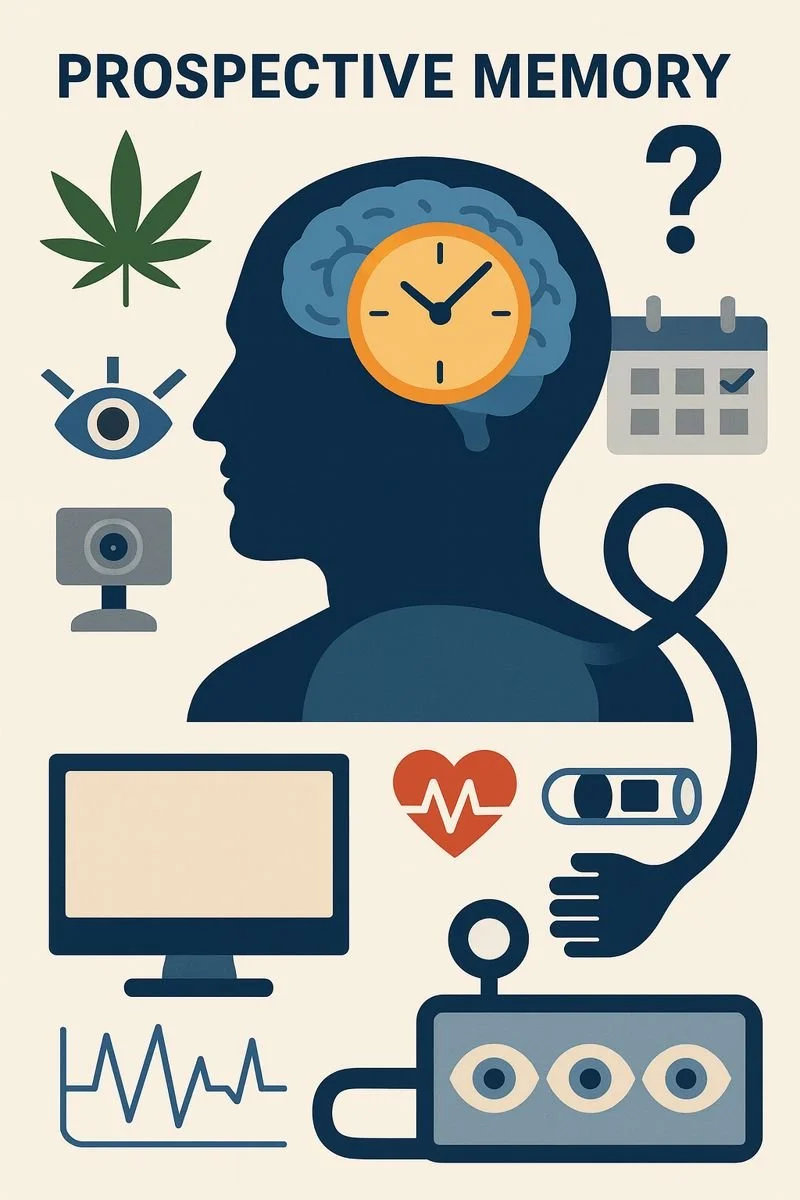
This project examined how acute use of high-potency cannabis affects prospective memory, our ability to remember to carry out intentions in the future with temporal and spatial accuracy. The use of high-potency cannabis has become more common, with legalization of recreational use in many states. Thus, to protect users and those who may be harmed by cannabis-related impairment (e.g. driving while intoxicated), it is necessary to understand how cannabis use affects the cognitive systems that support everyday goal management, safety, and planning. At the same time, cannabis has legitimate therapeutic and recreational uses, so the goal is not to criticize the use but to quantify when and how acute intoxication impairs cognition. The study investigated how active cannabis use relates to their performance on prospective memory tasks and related cognitive measures, while simultaneously collecting biometric data during real-world cannabis use in participants’ homes (eye tracking, pupillometry, blood pressure, heart rate, and temperature during real-world cannabis use in participants’ homes.)
Technical Explanation of my contributions:
Biometric Sensing & Data Collection
Conducted in-home data collection sessions during acute cannabis use, setting up portable systems to record eye tracking, pupil diameter, and behavioral performance on prospective memory tasks
Calibrated and maintained biometric sensors (eye tracker, pupillometry, and vital-sign equipment, structural chin rest), and ensured that all biometric streams were synchronized with task events and self-report measures. Troubleshooting frequent software and hardware errors that occur when traveling with biometric sensing equipment.
Managed participant interactions end-to-end (consent, instructions, task administration, debriefing). Trained to work with participants under strenuous, unpredictable conditions (e.g. trauma-related studies, acute drug use), maintaining safety, rapport, and high-quality data collection even in emotionally charged or unstable situations.