Current Research
Dynamical Inference Lab
Multimodal Brain Organoid Neural Dynamics
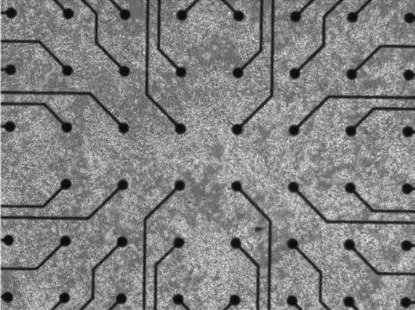
Developing data infrastructure and machine learning workflows to analyze how human brain organoid networks evolve and respond to stimulation across electrophysiology and calcium imaging recordings.
Credits: Steffen Schneider, Silviu-Vasile Bodea, Lucas Mair, Westmeyer Lab
GitHub: unreleased repository
Project Status: in progress
Project Overview
This project studies how human brain organoid networks organize, develop, and respond to external stimulation through multimodal recordings. Using both multielectrode array electrophysiology and calcium imaging, I help build pipelines that transform raw neural recordings into structured, analysis-ready datasets for modeling spontaneous activity, evoked responses, and evolving network states. The long-term aim is to support adaptive, closed-loop brain-computer interaction with living neural systems.
Personal Contribution
Built research pipelines for organoid neural dynamics using both multielectrode array electrophysiology and calcium imaging data
Designed multimodal DataJoint infrastructure for experiment metadata, preprocessing, validation, and analysis workflows
Developed analysis pipelines for stimulation-aligned responses, network dynamics, dimensionality reduction, clustering, and visualization
Supported reproducible modeling across large-scale recordings to compare spontaneous and evoked activity over development and intervention
Core Skills
data pipelines · signal processing and time series analysis · neural dynamics · machine learning · visualization
Time-series Integration across Modalities for Evaluation of Latent Dynamics
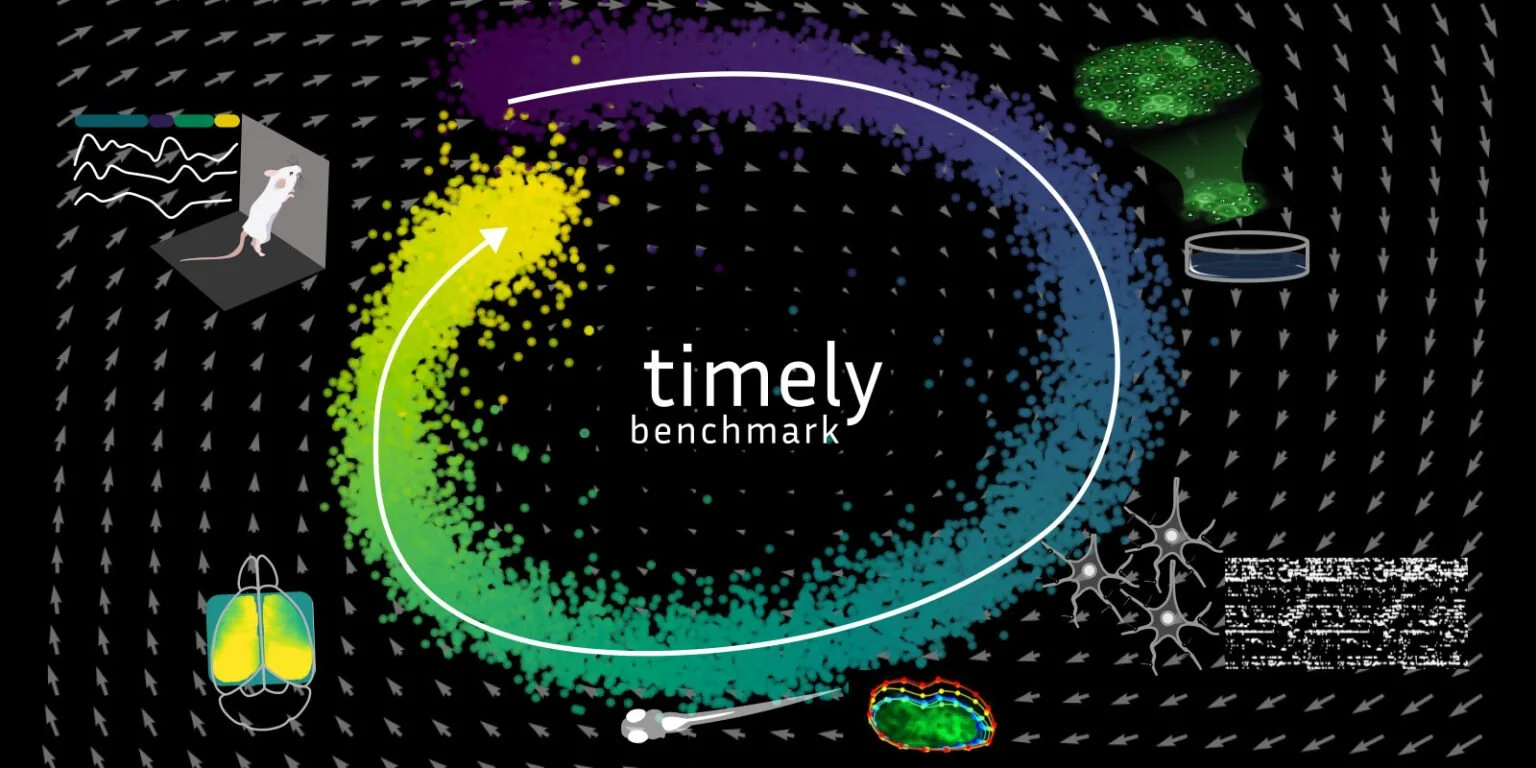
Engineered large-scale behavioral time-series data from the German Mouse Clinic into a standardized, machine-learning-ready resource for benchmarking dynamical models across thousands of mice.
Credits: Steffen Schneider, Gil Westmeyer, Carsten Marr, Sabine Hölter-Koch, Christian Müller, Malte Lücken, German Mouse Clinic, Stanford University
Published Information: click here
Project Status: in progress
Project Overview
This project addressed the challenge of preparing large behavioral datasets for robust machine learning analysis. Using mouse open-field recordings and associated metadata collected across multiple years, I built workflows for cleaning, standardizing, and aligning data into formats suitable for benchmarking latent-dynamics models. This work helped create a more reliable foundation for large-scale behavioral modeling within the TIMELY framework.
Personal Contribution
Integrated multi-year open-field trajectory data and metadata from the German Mouse Clinic into a unified analysis pipeline
Converted irregular behavioral recordings into machine-learning-ready time-series representations
Designed filtering, matching, and validation workflows to improve dataset consistency and reproducibility
Produced benchmark-ready data artifacts for evaluating latent-dynamics models across large behavioral cohorts
Core Skills
Data Engineering · Time-Series Modeling · Behavioral Analysis · Machine Learning · Benchmark Datasets · Data Validation